
This will have an impact on inflation as everyone in the value chain passes on the costs.

Several carmakers, including car market leader Maruti Suzuki India pulled the plug on diesel models citing higher costs for BSVI variants leaving buyers with limited options.
A knee-jerk reaction, they said, could be detrimental to the fortunes of an industry that is highly dependent on the country given the huge competitive advantage it offers, in terms of cost and speed.
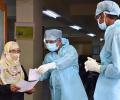
The committee has recommended Rs 8,000-10,000, Rs 13,000-15,000, and Rs 15,000-18,000 including PPE costs for isolation beds, and ICUs with or without ventilator, respectively, to all hospitals. Currently, hospitals are charging Rs 24,000-25,000, Rs 34,000-43,000 & Rs 44,000-54,000 (excluding PPE cost).
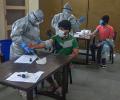
Experts say a large part of the expenditure in April was spent on heads such as creating infrastructure for testing capacity and procuring testing kits, among other things.

To be able to tide over the current crisis, automobile manufacturers have waged a war against all cost heads.

ICMR's serological survey, whose findings will be made public next week, suggests that the rate of contagion may be a lot higher in most-affected cities such as Delhi, Mumbai, and Pune.

From auto, refrigerator, and mobile handset makers to real estate firms, companies are tying up with banks to dole out attractive finance schemes and discounts to make buying more affordable.
In a circular dated May 20, Sebi had directed the listed companies to evaluate the impact of Covid-19 on their capital and financial resources, profitability, liquidity position, assets, and ability to service debt. Instead, companies have spoken about the number of plants, warehouses and distribution centres that have resumed operations; work-from-home and safety measures undertaken for employees; and the labour shortage they are facing.

Nearly half of all coronavirus patients in the country have been cured, taking the recovery rate to over 48 per cent.

After the easing of lockdown in mid-May, auto companies were able to resume production in a phased manner, but the ramp-up was slow due to a broken supply chain, and lockdown-induced restrictions.

'We don't know how complicated things will get with the onset of the monsoon.'
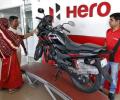
Besides regular buyers, there is lot of interest among those in essential services, such as health, banking, and IT. The sales will be helped by social distancing becoming the new normal in both urban and rural regions as people will be averse to using public transport.

Most feel as the movement of people normalises, the in-patient volumes in hospitals will grow and by the end of May, occupancy should be around 50 per cent, and 75 per cent over a period of time.

There has been an exponential increase in the use of technology to validate financial numbers, with a greater reliance on electronic evidence, use of live videos where possible, data analytics, and project management software to overcome the physical limitations in verifying transactions and accounts.

Hotels are using a combination of platforms to reach out to the guests. These include online travel agents among others. hotels in India are offering guests an option to pay now and stay later.

A clutch of automakers including Maruti Suzuki, Hero MotoCorp, Mercedes Benz India, Eicher Motors, TVS Motor, and Isuzu Motors India announced they had got the clearance from the governments of the states they operate in to resume operations.

A letter sent out by Delhi government asked all medical directors to provide a written explanation on how the health workers contracted the disease despite wearing protective gear, maintaining safe distancing and taking all precautions.

These are becoming one of the most in-demand commodities in the COVID world with malls, offices, banks, and shops lining up to install the structure at their entrances. The company swamped with these orders is a relatively new one, Chennai-based Nanolife, which has patented its Rajat Bhasma formula or the silver nanoparticles solution as a healthy disinfectant. Sceptics, however, say if a person is potentially exposed to the COVID-19 virus, spraying the external part of the body would not kill the microbe, which is inside the body.
Govt has decided to suspend Sections 7, 9, and 10, which are used to trigger insolvency proceedings for six months or a period not exceeding one year from the date they commence.
 © 2026 Rediff.com - Investor Information - Advertise with us - Disclaimer - Privacy Policy - Sitemap - Feedback - About us - Terms of use - Grievances